Semaglutide
GLP-1 receptor agonist for metabolic disease and weight management.
Read library entryPeptide therapy in Houston with a full workup, provider oversight, and honest guidance on which options are FDA-approved, which are compounded, and which aren’t appropriate for you.
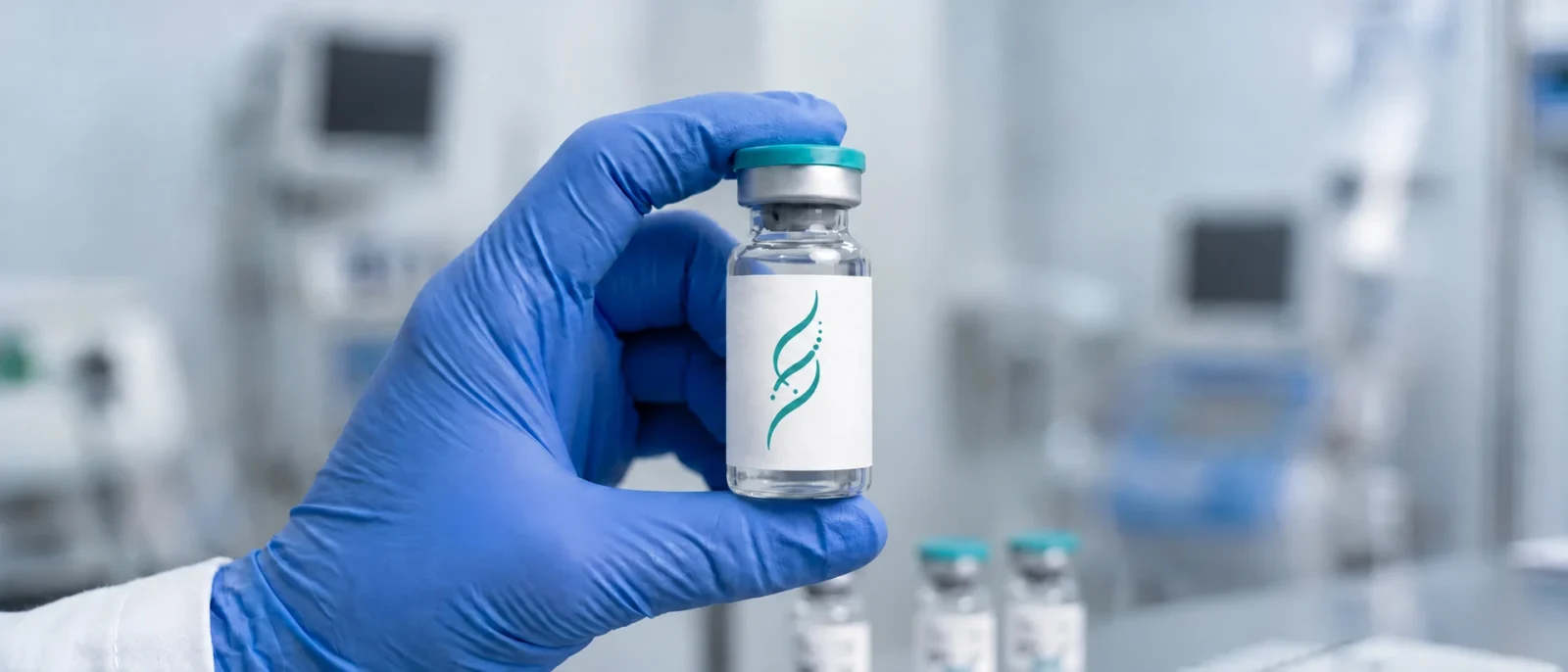
Peptide therapy has become one of the fastest-growing categories in functional and integrative medicine, and one of the most poorly explained. There are dozens of peptide clinics in Houston — many positioned as wellness boutiques, some as testosterone-clinic add-ons, very few built as serious medical practices. The result is a market where patients are often handed prescriptions for compounds they don’t fully understand, by clinicians whose primary expertise is something else entirely.
At The Tide, peptide therapy is handled as real medicine — not a profit center bolted onto a medspa. We approach it the way it deserves to be approached: comprehensive lab evaluation, real clinician consultation, evidence-honest prescribing, and ongoing monitoring that actually monitors something meaningful.
A peptide is a short chain of amino acids that signals biological activity in the body. Therapeutic peptides are designed to interact with specific cellular receptors to produce specific physiological effects — different from supplements (which provide nutrients), different from steroids (which work through entirely different mechanisms), and different from generic “wellness” products. Most therapeutic peptides are administered by subcutaneous injection because they would be destroyed by digestion if taken orally.
The peptide therapy landscape spans three major regulatory categories. FDA-approved peptide pharmaceuticals like Wegovy and Ozempic (semaglutide) and Zepbound and Mounjaro (tirzepatide) are mass-manufactured drug products with full Phase III evidence and clear regulatory frameworks. Peptides without FDA approval vary widely: some, like compounded sermorelin, can be lawfully prescribed by a licensed provider but are not FDA-approved; others have no current legal pathway, and we do not offer them. Research peptides sold online with “for research purposes only” disclaimers are not legally available for human use and we do not work with them.
The Tide’s peptide library is organized by clinical purpose. Different peptides address different goals; matching the peptide to the goal is the work of the clinic.
Metabolic and weight-related: FDA-approved brand-name GLP-1 medications for medical weight loss and metabolic dysfunction.
Hormonal: Compounded sermorelin (not FDA-approved), which may be considered after evaluation for documented age-related GH-axis decline; gonadorelin (compounded; not FDA-approved) and HCG (off-label in men), which may be discussed for men on testosterone therapy who are concerned about fertility.
Recovery and regenerative: Diagnosis-first recovery care; topical GHK-Cu (compounded; not FDA-approved) may be discussed for skin care after procedures.
Sexual wellness: Bremelanotide (PT-141), FDA-approved as Vyleesi only for premenopausal women with HSDD (other uses are off-label), and oxytocin, FDA-approved for labor and postpartum use (intranasal use is off-label), may be discussed after evaluation.
Immune and inflammation: A targeted workup for immune and inflammatory concerns; low-dose naltrexone (an off-label use) may be discussed.
Longevity: Biomarker-guided care; NAD+ (not FDA-approved for these uses) may be discussed.
Not all of these are peptides, and each has its own regulatory status and evidence base. Our peptide library provides educational information. The clinical decision about which peptides fit your situation is made together during your consultation.
You may be an appropriate candidate if:
You may not be the right fit if you are looking for peptides without medical workup, if you have active or recent malignancy (which may be a contraindication), if you are pregnant or breastfeeding, or if you are seeking experimental research compounds without legitimate clinical pathway.
Comprehensive baseline workup. Before any peptide protocol, we order a foundational lab panel customized to your situation. The specifics vary based on what you’re starting — GLP-1 candidates get metabolic panels and HbA1c; GH-axis candidates get IGF-1 and IGFBP-3; hormone-focused patients get full sex hormone panels with appropriate sensitivities. Most patients arriving at our clinic have never had this level of workup. The labs frequently identify findings that affect the treatment plan.
Clinician consultation. Forty-five minutes to discuss your goals, your history, what you have tried, and what realistic options look like. We talk honestly about evidence: which peptides have substantial human RCT data (semaglutide, tirzepatide), which are compounded, not FDA-approved, and supported by limited human trial data (such as sermorelin), and which fall outside our prescribing scope.
Selective prescribing. We do not prescribe peptides without documented clinical need. We do not promise peptide therapy will fix concerns better addressed through other means. We do not push high-volume protocols just to maximize visits. Many of our consultations conclude with recommendations that are not peptide prescriptions.
Licensed pharmacies. Prescriptions are typically sent to one of the licensed pharmacies we work with, and you may ask us to send your prescription to a different licensed pharmacy.
Structured monitoring. Follow-up labs at 90 days for most protocols. Patient-reported outcomes at every visit. Adjustment of protocols based on what we observe in your labs and how you actually feel. We do not extend treatment courses indefinitely — if a peptide isn’t working at 4 to 8 weeks for most indications, we reassess rather than continue.
Outcomes vary substantially by peptide and indication. Some peptides produce noticeable effects within days (GLP-1 medications often affect appetite within the first weeks; bremelanotide is used as needed, per its labeling). Others produce gradual changes over weeks (GH-axis support shows IGF-1 changes over 8-12 weeks).
We are honest about effect sizes throughout. Peptide therapy is not a transformation. The dramatic before-and-after marketing typically shown by other clinics is usually the result of foundational work (training, nutrition, sleep) attributed to a peptide. The patients who succeed long-term are the ones who treat peptides as one component of comprehensive health work — not a magic intervention.
We do not prescribe peptides without baseline labs. We do not prescribe Melanotan II — its broad melanocortin activity has documented associations with atypical pigmented lesions and possible melanoma risk; we use bremelanotide (PT-141) instead. We do not push pellet therapy as a default modality. We do not offer the so-called HCG diet, which is not evidence-based. We do not work with research-only compounds purchased from non-pharmaceutical sources. We do not promise outcomes we cannot deliver.
Peptide therapy at The Tide is a cash-pay service in most cases. Pricing varies by protocol — GLP-1 medications carry their own significant medication costs, while peptides like sermorelin are more accessible. Our consultation, lab review, and ongoing monitoring services are billed separately from medication costs. Some patients have insurance coverage for specific medications (particularly GLP-1s for diabetes); we can help you understand whether that applies to your situation.
Most clinics offering peptide therapy in Houston are operating outside their primary expertise. A medspa offering peptides primarily does aesthetics. A low-T center offering peptides primarily does testosterone. A primary care office offering peptides is fitting them around 15-minute appointments. Each of these models has its place, but none of them is structured as a dedicated peptide therapy provider.
Peptide therapy is our specialty, and The Tide is structured around it. Our clinicians focus on this work, with physician oversight. Our clinical protocols are built around it. Our lab panels are designed for it. Our editorial library provides educational information on peptides and related medications. Our clinic at 6909 Grand Boulevard is adjacent to the Texas Medical Center — accessible from across the Houston metro.
If you have searched for “peptide therapy Houston,” “peptide clinic Houston,” “peptide therapy doctor Houston,” “GLP-1 Houston,” or any related terms, and you want a peptide therapy clinic in Houston that takes the medicine seriously rather than treating it as a transaction, this is the right place to start.
Some medications discussed on this page are prescribed off-label, and compounded preparations are not FDA-approved. Available human clinical evidence for many of them is limited. Information on this page is provided for educational purposes; clinical decisions are made individually during your consultation. See our full disclaimers for additional context.
FDA-approved peptide pharmaceuticals have safety profiles that are well-characterized through their formal approval process. Peptides without FDA approval have not had their safety established in well-controlled human trials; most of what is known comes from preclinical data, though human RCT data for safety endpoints is more limited for some compounds. We screen for contraindications carefully (active malignancy, pregnancy, specific medication interactions) and discuss safety considerations specific to each peptide we prescribe. Patient safety is the primary reason we don’t work with research-only compounds — quality control on those products is unreliable.
It depends on what we’re treating. Some indications (GH-axis support, hormone optimization, metabolic support) involve longer-term therapy that may continue for years. Some treatments (sexual wellness with PT-141 or PDE5 inhibitors) are used as-needed rather than continuously. We discuss expected duration during consultation and reassess at follow-ups.
Less effectively. Peptides amplify good biology — they don’t replace it. A patient sleeping 5 hours nightly, eating poorly, and chronically stressed will get worse outcomes from peptide therapy than a patient with foundational work in place. We discuss foundations honestly during consultation. Sometimes our recommendation is to address foundations first and add peptides later.
Initial evaluation requires an in-person visit and baseline lab work. After establishing care, follow-up visits and prescription refills can often be handled via telehealth for established patients located in Texas. Lab work can be done at any LabCorp or Quest near you.
TRT clinics specialize in testosterone replacement and add peptides as an adjunct. The Tide is a broader hormone and metabolic practice — testosterone is one tool we use, alongside many others, and every plan starts with a full workup rather than a default protocol.
No. We work exclusively with FDA-approved pharmaceuticals and licensed compounding pharmacies that meet specific quality standards. Research-only compounds purchased from research peptide vendors do not meet pharmaceutical quality standards and we cannot incorporate them into clinical care responsibly.
Book an in-person consultation at our Houston clinic, or ask about telehealth if you live elsewhere in Texas. The first visit is 45 minutes — the right place to discuss whether peptide therapy is a fit for your situation. We will not prescribe anything in the first visit. Prescription decisions follow your baseline labs and a clinical decision. The consultation is the start of an evaluation, not the prescription itself.
Each entry below links to its library page with mechanism, evidence, and regulatory status. Inclusion here does not mean a peptide is currently offered.
GLP-1 receptor agonist for metabolic disease and weight management.
Read library entryDual GIP/GLP-1 receptor agonist FDA-approved as Mounjaro and Zepbound.
Read library entryGRF 1-29
Synthetic GHRH analog (GRF 1-29). Previously FDA-approved as Geref; the brand product was discontinued. Current US supply is compounded and not FDA-approved.
Read library entryPT-141 · Vyleesi
Melanocortin receptor agonist FDA-approved (Vyleesi) only for premenopausal women with acquired, generalized HSDD.
Read library entryCopper tripeptide-1
Naturally occurring copper-binding tripeptide used in topical cosmetics. Injectable forms are not FDA-approved.
Read library entryEditorial articles from our medical team on the science underneath this service.
The category most patients get wrong. A practical guide to the regulatory landscape and why it matters for your care.
Read articleHow to evaluate the evidence behind peptide claims. The questions that separate signal from noise in a field full of overstated marketing.
Read articleAn honest list of peptides we choose not to offer, and the reasoning behind each decision. What we don’t do is as important as what we do.
Read articleThe Tide serves patients across the Houston metro, with our clinic at 6909 Grand Blvd — directly adjacent to the Texas Medical Center. Patients come to us from Texas Medical Center, Museum District, Rice Village, Bellaire, the Heights, West University, Galleria, River Oaks, Memorial, and surrounding areas.
If you have searched for "peptide therapy Houston peptide clinic" or related terms, our editorial library and clinical team are designed to give you a clearer answer than most clinics provide.
Forty-five minutes with one of our providers to walk through your goal, your history, and whether this service is a reasonable fit. Nothing is prescribed without lab work and a clinical decision.
Book consultation